How to Use a Classroom Expectations Poster to Set Your Students Up for Success
Establishing routines and expectations is one of the most important things you’ll do at the beginning of the school year. Especially in a K–2 classroom, students need clear, consistent guidance to understand what is expected of them throughout the day. That’s where a classroom expectations poster becomes a powerful tool.
Whether you’re a brand-new teacher or a seasoned pro looking to simplify your classroom management, having visual expectations posted and taught from day one can make a world of difference.
Why Visual Expectations Work So Well in K–2
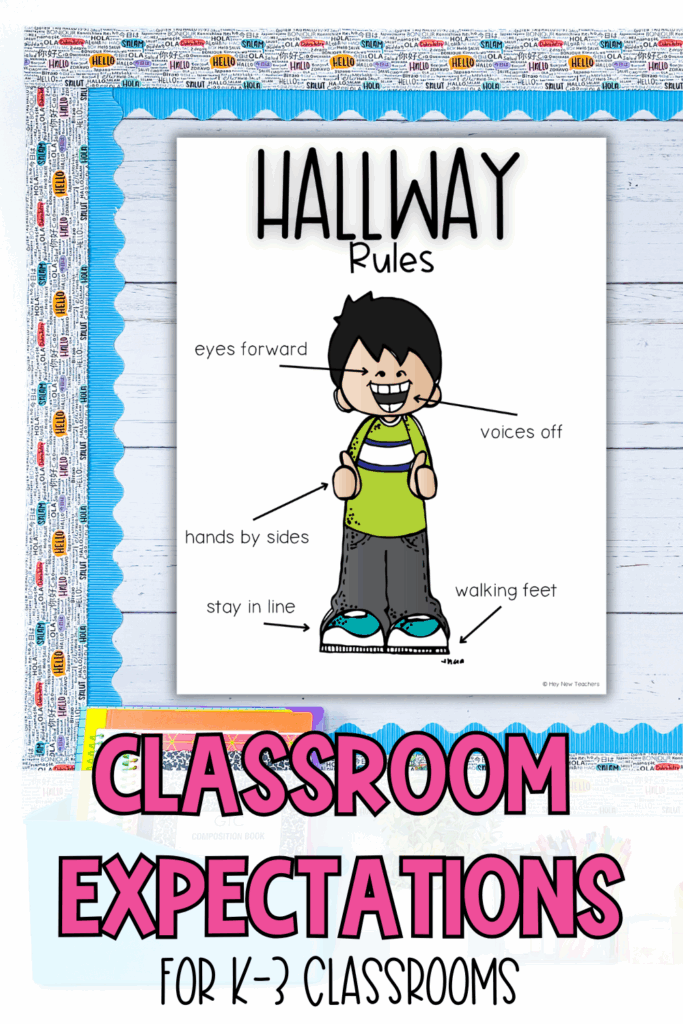
Young learners are still developing language skills, attention spans, and independence. While you might say “walk quietly in the hallway,” that doesn’t always stick. But when students can see a clear visual reminder — like a picture of a child walking in line with hands by their side — it reinforces what you’ve taught in a developmentally appropriate way.
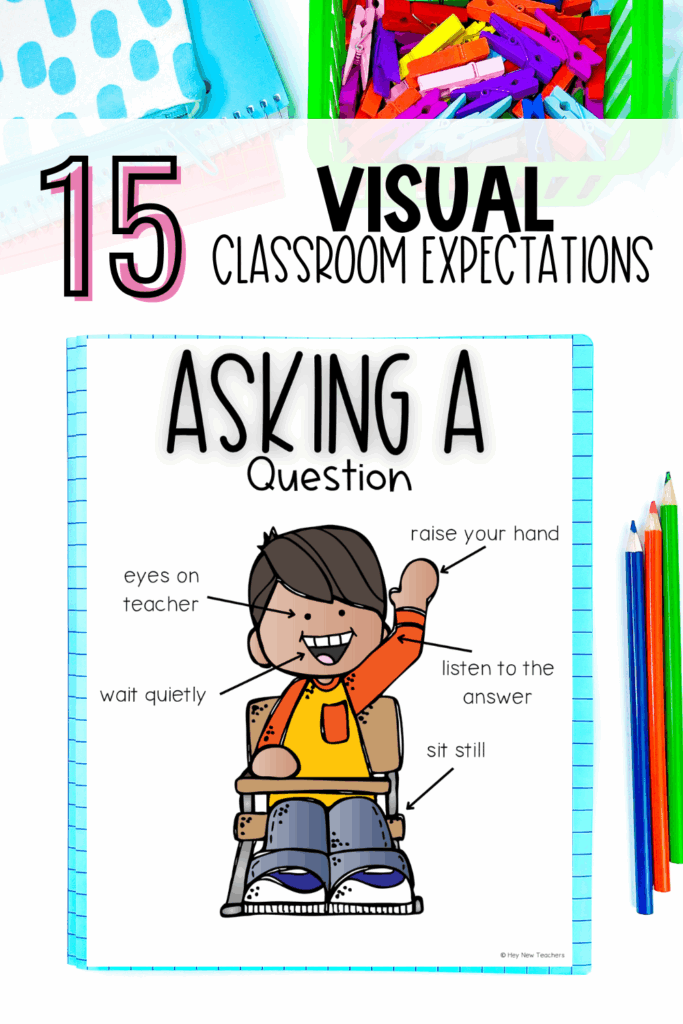
These types of visuals become an anchor throughout the day. They remove the guesswork and help students feel more confident about what to do in common classroom situations.
When and How to Introduce Your Classroom Expectations Poster
Don’t wait until there’s a problem. Visual expectations work best when introduced proactively. Here’s how I like to do it:
- Teach each expectation explicitly.
Gather students together and talk through the poster. Use simple language and ask students what they notice. - Model the correct behavior.
Act out the expectation yourself first. Then invite a few student volunteers to demonstrate it, too. - Practice it as a group.
Whether it’s walking to the rug or lining up, give students the chance to try it the right way. - Review, review, review.
Revisit the posters often, especially during the first few weeks of school. Consistent reinforcement helps routines become automatic.
What Types of Expectations Should You Teach?
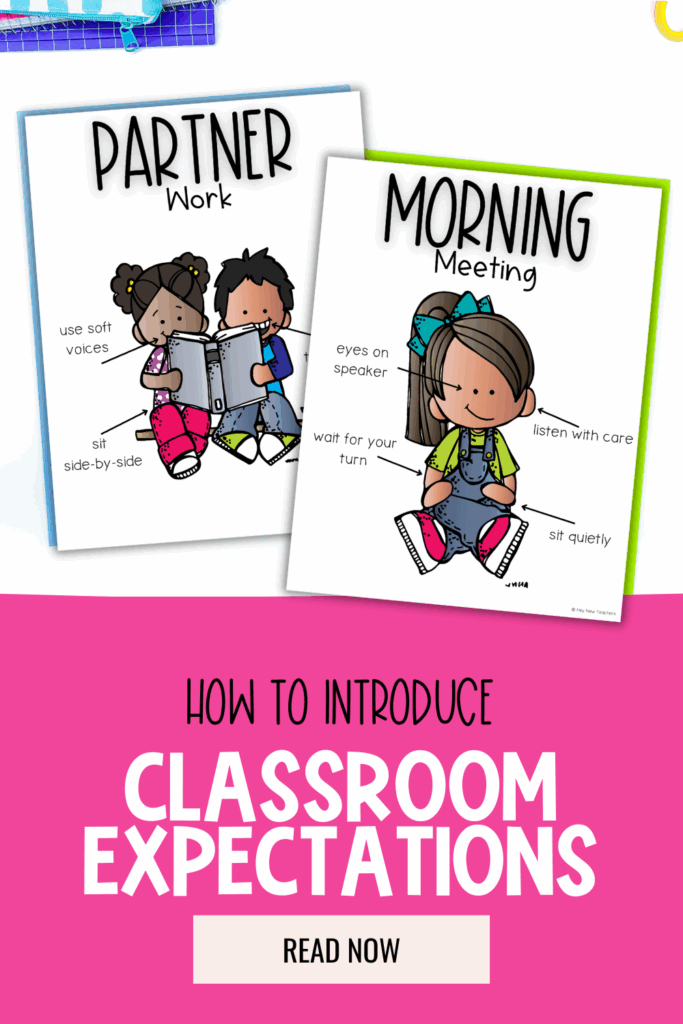
Every classroom is different, but these are some key routines that I recommend introducing visually, especially for younger learners:
- Moving to the rug
- Lining up
- Hallway behavior
- Asking a question
- Partner work
- Using the bathroom
- Getting a drink
- Rug time
- Technology time
- Lunchroom behavior

The great thing about having a variety of posters to choose from is that you can customize them to fit your classroom. Maybe you have a tech center, but don’t do a morning meeting just print the ones that make sense for your space.
How I Use Classroom Expectations Posters in My Classroom
In my classroom, these posters are part of our daily language. I hang them in visible places — near the door, by the carpet, above student desks, and near the sink. Whenever I see a student forgetting what to do, I don’t need to raise my voice or reteach the entire routine. I just point to the poster and say, “Let’s check the hallway expectations.”
It’s a gentle but powerful way to redirect behavior without disrupting learning.
Where to Get Classroom Expectations Posters That Work
If you’re looking for a simple way to bring this strategy into your own classroom, I’ve created a set of 15 visual classroom expectations posters designed just for K–2 students.
They’re full color, developmentally appropriate, and ready to print and use.
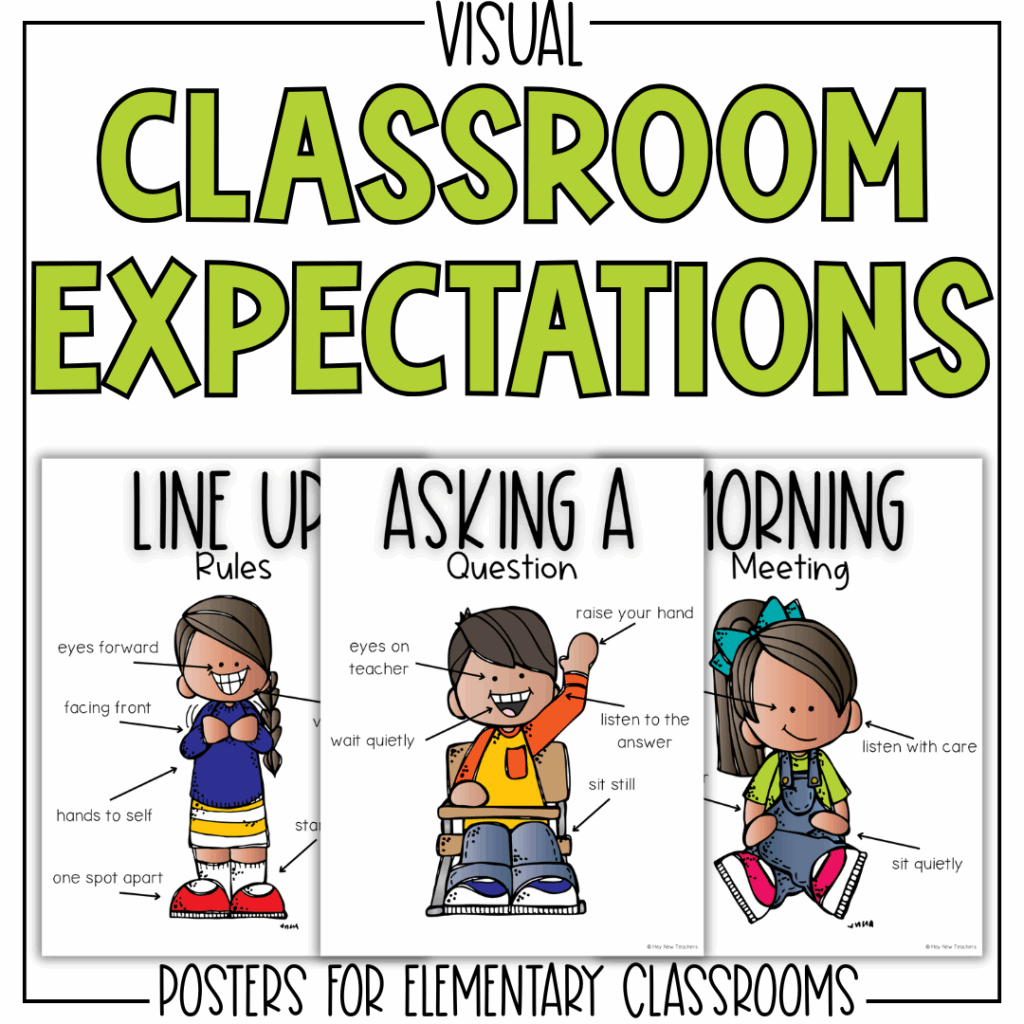
The best part? You can mix and match the posters to meet your needs. Just print the ones that fit your routines, teach them explicitly, and refer to them throughout the year.
Teaching expectations doesn’t have to be overwhelming. In fact, with the right tools and strategies, it can feel completely manageable, even on the very first day of school.
Using a classroom expectations poster to model behavior visually gives your students the structure they need and frees you up to focus on teaching (instead of constantly correcting).
Want to be ready on day one?
🎯Grab your Visual Classroom Expectations Posters here

Needing more support for back to school? Check out these blog posts:
10 Classroom Routines to Teach on the First Day of School