
10 Classroom Routines to Teach on the First Day of School
Want a smoother school year? Start with strong classroom routines.
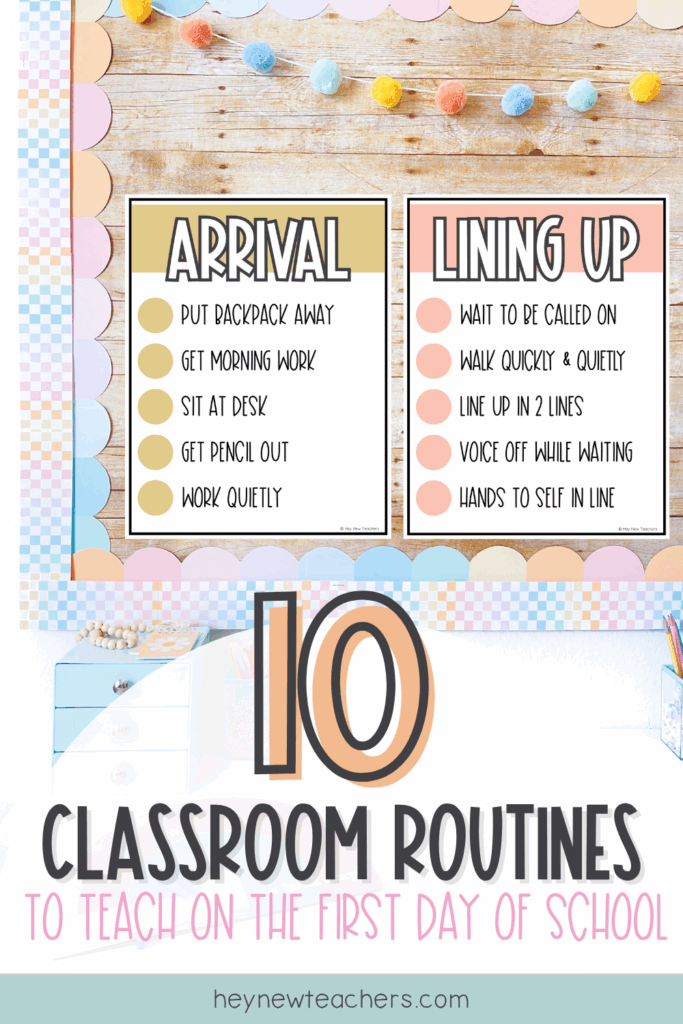
If you’re a new teacher, you’ve probably spent a lot of time thinking about your classroom setup, your first-day outfit, and what read-aloud you’ll use to kick off the year. However, one of the best ways to create a calm, structured classroom from the start is to focus on teaching classroom routines, intentionally and consistently.
Drop your name and email below, and I’ll send you a FREE First Week of School guide that will walk you through how to plan the first week of school.
Let’s talk about what routines really are, why they matter, and exactly how to teach them in a way that actually works.
Why Classroom Routines Are Essential from Day One
Classroom routines are the foundation of a well-run classroom. They tell students what to expect, what’s expected of them, and how things work, so you don’t have to explain it every single time.
Routines reduce behavior problems, give students a sense of security, and allow more time for actual teaching and learning. When routines are clearly taught and practiced, your classroom feels calm and predictable, even on chaotic days.
Think of classroom routines as the engine behind your classroom management plan. Without them, you’ll be putting out fires all day long.
10 Classroom Routines to Teach on the First Day of School
Not sure where to start? Here are 10 essential classroom routines I recommend teaching right away. You don’t have to cover them all at once, but each of these will make your first week (and the entire year) run more smoothly.
1. Morning Arrival
Students need to know exactly what to do when they walk in the door. Where do they put their backpack? How do they check in for lunch? What do they do while they wait for class to start?
2. Bathroom Procedure
Will they raise a hand, use a signal, or take a pass? Set expectations for when and how students may use the bathroom so you’re not overwhelmed with requests mid-lesson.
3. Attention Signal
Choose one way to get your students’ attention and use it consistently. Whether it’s call and response, a chime, or a hand signal, practice it multiple times throughout the day.
4. Lining Up
Show students how to push in chairs, where to line up, and what voice level to use. This routine matters more than you think, especially when transitioning to specials or recess.
5. Transitions Between Activities
One of the most overlooked classroom routines is transitioning from one task to another. Set clear expectations about what it should look and sound like when moving between activities.
6. What to Do When Finished Early
Having an early finisher plan prevents off-task behavior. Teach your system right away so students always know what to do next.
7. Sharpening Pencils
Keep this simple. A two-cup system (sharp and dull) or designated times to sharpen pencils can save time and sanity.
8. Asking for Help
Teach students when and how to ask for help. Do they raise a hand, use a help card, or ask a neighbor first?
9. Turning in Work
Establish a clear location and routine for turning in assignments. This avoids piles of papers left on your desk—or worse, in student desks.
10. End-of-Day Routine
Dismissal can easily become chaotic. Practice packing up, cleaning desks, stacking chairs, and lining up in the correct order for buses or parent pick-up.
How to Teach Classroom Routines That Stick
The secret to making classroom routines work long-term isn’t just telling students what to do. You need a clear process. I use this 4-step method with every routine I teach: Teach, Model, Practice, Review.
Step 1: Teach
Explain the routine clearly. Break it into steps and tell students why it matters.
Step 2: Model
Act it out exactly how you want it done. Be specific. If needed, model what not to do, too.
Step 3: Practice
Have students practice the routine right away. Watch closely and give feedback as they do it.
Step 4: Review
Reinforce the routine with positive feedback. Reteach or revisit as needed, especially after weekends or breaks.
This process may feel repetitive, but it builds confidence and consistency. When your students know what’s expected and how to meet those expectations, everything becomes easier for you and them.
One Routine That Can Make or Break Your Day
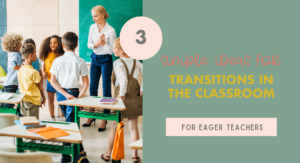
Of all the classroom routines, the one that often gets overlooked—but can transform your day—is transitions.
Think about how often you transition in a day: from the carpet to desks, from reading to math, from whole-group to small-group time. These in-between moments can either keep momentum going or derail your entire lesson.
How to teach transition routines:
- Give clear, simple instructions before the transition begins.
- Use timers or music to signal transitions.
- Reinforce what a successful transition looks like.
- Celebrate when students meet the expectation quickly and quietly.
A few seconds of clarity and practice here can save minutes of chaos later.
Ready to Get Confident with Classroom Routines?
If this post has your wheels turning but you’re still wondering how to plan all your routines without feeling overwhelmed, I’ve got you.
Inside Lesson 3 of the Confident From Day One Bootcamp, we dive deep into routines and procedures. I’ll guide you step-by-step through identifying your essential routines, mapping out how you’ll teach them, and preparing to practice them with your students—using the Teach, Model, Practice, Review method.
Plus, you’ll get editable planning tools and visual supports you can use right away with your class.
Want a jumpstart right now? Check out my Routines and Procedures Slides on TPT. They’re designed to help you introduce each routine clearly and consistently, without having to start from scratch.
You can explore all of my Classroom Management Resources here.
Teaching classroom routines is one of the smartest moves you can make as a new teacher. It might not feel flashy or exciting, but it sets the stage for everything else.
Don’t wait to see “how your class behaves” before you introduce routines. Plan ahead. Teach them clearly. Practice them often. And don’t be afraid to go back and reteach them when needed.
Your routines aren’t just about managing behavior; they’re about creating a space where students can thrive and where you can teach.
Want to make a classroom management plan that actually works?
Join us in the Confident From Day One Bootcamp, and I’ll walk you through every step.



One Comment
Comments are closed.